


Description
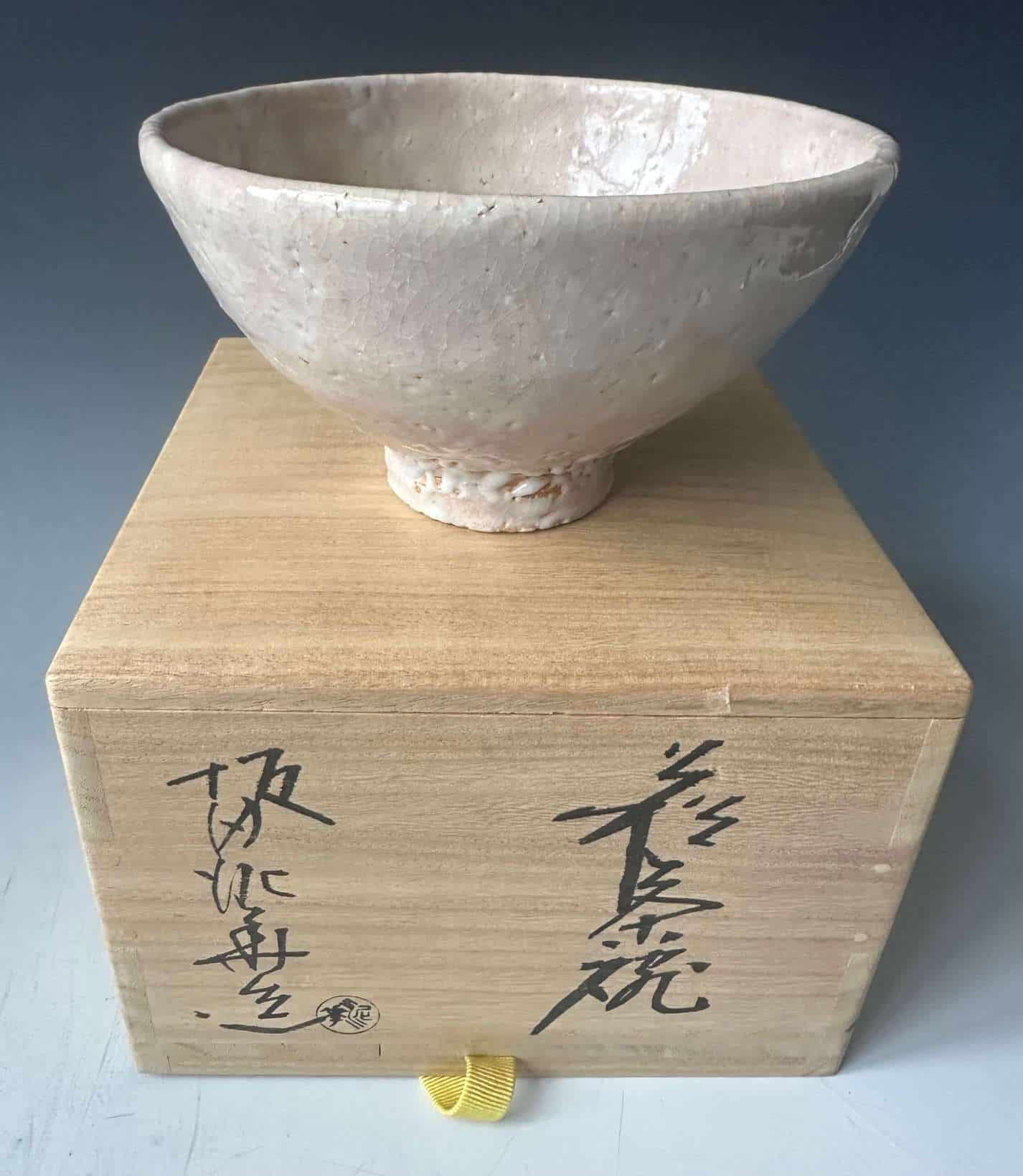
An understated contemporary Japanese tea bowl (chawan) executed in the Shino ware tradition, accompanied by its original signed tomobako (wood storage box). This piece embodies the quiet sophistication and tactile warmth that define Shino ceramics, long celebrated within the Japanese tea ceremony.
The bowl presents a soft, luminous glaze in creamy whites and pale ivory tones, subtly shifting across the surface with gentle irregularity. Fine natural crazing (kannyū) weaves throughout the glaze, creating a delicate network that enhances both depth and character. These subtle crackles—formed during the cooling process—are highly prized, reflecting the organic nature of traditional firing methods.
Across the surface, faint variations in tone emerge—whispers of warm undertones and soft blushes beneath the glaze—giving the piece a living, breathing quality. The texture is slightly undulating, with small kiln-formed dimples and irregularities that speak to its handmade origin.
The foot reveals exposed clay typical of Shino ware, with warm, iron-rich earthen tones contrasting beautifully against the soft white glaze above. This interplay between refined glaze and raw clay is central to the aesthetic philosophy of Japanese tea ceramics.
Shino ware originated in Japan during the late 16th century (Momoyama period) and is one of the earliest forms of white-glazed pottery in the country. Known for its thick feldspar glaze, soft milky tones, and characteristic crazing, Shino ceramics are deeply connected to the ideals of wabi-sabi—embracing imperfection, natural beauty, and the passage of time.
Age: Contemporary
Dimensions: 7″ x 7″ x 5 1/2″